A root canal is needed when the nerve inside your tooth gets infected or damaged. Signs you need a root canal include severe pain, sensitivity to hot or cold, discoloration, or swelling. Not every toothache means you need one. Understanding the difference helps you know when to get help and when you can wait.
Why This Matters
Toothache is a fear. Your first reaction is likely, “Oh no! I need a root canal!” You freak out. You are concerned about pain and cost. But the reality is this: Most toothaches do not mean you need a root canal.
Some toothaches are just cavities. Some are from gum problems. Some are from teeth grinding. Some are temporary and go away on their own.
Root canal therapy in Hamilton and everywhere else shows that many people rush to the dentist thinking they need a root canal, but they do not. They just need a filling or some other simple fix.
Understanding what a root canal really means helps you stay calm. It helps you know when root canal therapy near you is actually necessary. And it helps you get the right treatment.
What Happens Inside a Tooth
Before we talk about signs, you need to understand what a root canal is.
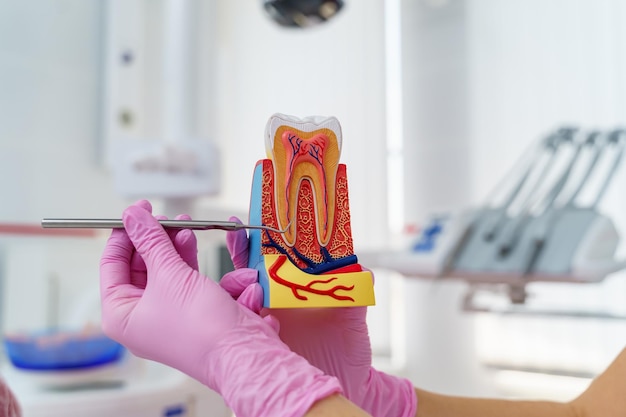
Inside your tooth is soft tissue called the pulp. The pulp has nerves and blood vessels. When you are young and your tooth is growing, the pulp is important. Once your tooth is fully grown, the pulp is not really needed anymore. Your tooth can live without it.
But if bacteria get inside and infect the pulp, your tooth hurts. The nerve sends pain signals to your brain. That is when you need a root canal.
A root canal removes the infected pulp. It cleans out the inside of your tooth. It fills the space with special material. Now the pain stops. Your tooth survives.
The 7 Signs You Might Need a Root Canal
Sign 1: Severe Pain When You Bite
If biting down on a tooth causes sharp, severe pain, your nerve might be infected.
What this feels like:
- Shooting pain when you chew
- Pain that makes you stop eating
- Pain that wakes you up at night
- Pain on one specific tooth
- Pain that stays even after you stop chewing
Why it happens:
- The infected nerve is irritated
- Pressure from biting makes it worse
- The infection is active and spreading
Do not confuse with:
- Temporary sensitivity (goes away quickly)
- Pain from just that bite (sometimes you bite wrong and it hurts temporarily)
Sign 2: Sensitivity to Hot or Cold That Lingers
Most teeth are sensitive to very hot or very cold things. But the sensitivity goes away quickly. If your tooth stays sensitive for minutes or even after you remove the hot or cold item, that is a sign.
What this feels like:
- Pain when drinking hot coffee
- Pain when eating ice cream
- Pain that lasts a minute or longer
- Pain that is sharp and shooting
- Just one tooth is sensitive, not your whole mouth
Why it happens:
- The nerve is irritated
- Heat or cold bothers the infected pulp
- The nerve is dying or infected
Do not confuse with:
- Normal tooth sensitivity (quick, brief pain)
- Sensitivity to very extreme temperatures (normal for everyone)
Sign 3: Tooth Discoloration or Darkening
Your tooth changes colour. It becomes darker. It might look gray or black.
What this looks like:
- The tooth looks darker than neighbouring teeth
- Colour change happens slowly over time
- The whole tooth looks discoloured, not just a stain
- Colour does not go away with brushing
Why it happens:
- The nerve inside is dying
- Dead tissue changes the tooth colour
- Blood and decay products stain the tooth from inside
Do not confuse with:
- External stains from coffee or tea (brush off)
- Cavities (are holes, not colour changes)
Sign 4: Swelling in Your Jaw or Face
Your jaw or face swells up. Your cheek puffs out. Your jaw feels tight.
What this looks like:
- One side of your face will swell.
- Your cheek feels swollen.
- Your jaw feels enlarged than usual.
- Swelling gradually worsens over days.
- When you see yourself in the mirror, you appear different than usual.
Why it happens:
- An infection in your tooth spreads
- Your body fights the infection
- Swelling is your immune response
- The infection is getting serious
Important: If your face is swollen, this is more serious. Call your dentist at a dental clinic near you right away. This is not wait-and-see territory.
Sign 5: A Pimple or Bump on Your Gum
You see a small bump on your gum near a tooth. It might ooze pus.
What this looks like:
- A bump or pimple on your gum
- Appears near a specific tooth
- Might have a tiny hole in the centre
- Might ooze clear, yellow, or bloody fluid
- Comes and goes
Why it happens:
- An infection in the tooth is draining through your gum
- Your body is trying to get rid of the infection
- Pus is draining out through that spot
Do not confuse with:
- Canker sores (usually in your mouth, not on gums)
- Gum disease pimples (multiple pimples from gum disease)
Sign 6: A Cracked or Chipped Tooth
Your tooth has a visible crack or chip. This can let bacteria inside.
What this looks like:
- A visible crack running through the tooth
- A chip or piece missing
- The crack is deep, not just on the surface
- The tooth might feel loose or mobile
- You remember when it cracked (from an accident or bite)
Why it matters:
- Bacteria can enter through the crack
- The nerve becomes exposed and infected
- The crack lets moisture inside
- Without treatment, the crack gets worse
Do not confuse with:
- Surface cracks (tiny lines on the enamel, not through the tooth)
- Stains that look like cracks
Sign 7: Spontaneous Pain With No Obvious Cause
Your tooth just hurts. There is no obvious reason. You did not bite down. You did not eat anything cold.
What this feels like:
- Pain starts of nowhere
- Pain lasts for hours
- Pain comes back regularly
- Pain is in one specific tooth
- No cavity or visible problem explains it
Why it happens:
- The nerve is dying or infected
- The infection is active
- The nerve is sending constant pain signals
- Something is very wrong inside the tooth
The Toothaches That Usually Do NOT Mean Root Canal
Not every toothache means you need a root canal. Here is what usually does NOT need one.
Temporary Sensitivity to Cold
If your tooth hurts briefly when you drink cold water, but the pain stops right away, you probably do not need a root canal. You might just have sensitive teeth.
Pain From a Cavity
If you have a cavity, you get a filling. You do not need a root canal. The pain stops once the cavity is filled.
Sore Gums From Gum Disease
If your gums are sore and bleed, that is gum disease. You need a cleaning and better home care. You do not need a root canal.
Pain From Grinding Your Teeth
If you grind your teeth at night, your teeth might hurt. You need a nightguard. You do not need a root canal.
Pain From a High Bite
Sometimes a crown or filling sits too high. When you bite down, that spot hits first and hurts. Your dentist at a dental clinic in Hamilton adjusts it. You do not need a root canal.
Jaw Pain That Feels Like Tooth Pain
Sometimes jaw joint problems feel like tooth pain. But your actual tooth is fine. You need jaw treatment, not a root canal.
How to Tell the Difference
| Your Pain | Might Need Root Canal | Probably Does Not |
| Sharp pain when biting | Yes, if it is severe and lasts | No, if it is mild and brief |
| Sensitivity to cold | Yes, if it lasts minutes | No, if it stops immediately |
| Tooth is darker | Yes, likely | No, color is normal |
| Swollen face | Yes, definitely | No, no swelling |
| Bump on gum | Yes, likely | No, gum looks normal |
| Cracked tooth | Maybe, depends on depth | No, tooth looks intact |
| Spontaneous pain | Yes, very likely | No, pain has a clear cause |
| Pain lasts hours | Yes, if it keeps coming back | No, pain is brief |
What Your Dentist Does to Diagnose
Your dentist does not just guess. They use tests.
Tests they might do:
- Look at your tooth
- Take X-rays
- Tap on your tooth to see if it hurts
- Use heat and cold to test sensitivity
- Check your bite
- Ask questions about your pain
- Examine your gums
All of this helps them figure out if you really need a root canal.
When to Call Right Away
Call your dentist the same day if you have:
- Severe pain that does not go away
- Swelling in your face or jaw
- Fever with tooth pain
- A bump on your gum with pus
- A tooth that feels loose
- Pain that keeps you from sleeping or eating
These signs mean something serious is happening. Do not wait.
Do Not Ignore Tooth Pain
That toothache might not mean you need a root canal. But it definitely means something needs attention. Your tooth is telling you it is in trouble.
Do not guess. Do not hope it goes away. Do not wait and see. Call your dentist. Describe your pain. Explain your signs. Let them figure out what is really happening.
At Gore Park Dentistry, we listen to your tooth pain. We examine your tooth carefully. We test it to understand what is wrong. We explain exactly what you need. We help you get the right treatment, whether that is a filling, a cleaning, or a root canal. Call today and stop living with pain.
FAQs
What are the signs you need a root canal?
Excruciating, persistent, or sharp pain to hot or cold; discoloration of the tooth; swelling of your face; an abscessed bump that forms on your gums; a broken tooth; or pain that occurs without any cause are indications of needing a root canal.
How do I know if my pain is from a root canal problem or something else?
Your dentist examines and tests your tooth to tell the difference, so if you have bad tooth pain, get it checked rather than guessing.
Can I wait to get a root canal, or should I go right away?
If you have signs of a serious infection like facial swelling or fever, go right away, but other signs mean you should call and get an appointment soon, not emergency-room soon.
What if I ignore the pain and do not get a root canal?
The infection gets worse, spreads to your jawbone, causes facial swelling, fever, and can make you seriously sick; plus, you will lose the tooth, so treatment is important.